
Châteauneuf-du-Pape
Châteauneuf-du-Pape, the Rhône wine village: estate tastings from 8 to 26 euros and cellar tours from 20 to 35 euros, with seasons and booking rules.
At a glance
- The village that gave its name to a southern Rhône appellation
- Estate tastings from 8 to 26 euros per adult in 2026
- Cellar tours from 20 to 35 euros, down to 16th-century cellars at Château la Nerthe
- Le Verger des Papes pours in the village itself, at 2 Rue du Château
- Between Avignon and Orange, in the Vaucluse
- 1culinary experience
Culinary experiences in Châteauneuf-du-Pape
 jean-louis zimmermann, CC BY
Map of Châteauneuf-du-Pape
What to taste in Châteauneuf-du-Pape
Châteauneuf-du-Pape rouge
The red of the appellation, a blend led by Grenache. Le Verger des Papes and Domaines Mousset pour it on their tastings.
Châteauneuf-du-Pape blanc
The rarer white, in Le Verger des Papes’ 15 euro Prestige formula and Domaines Mousset’s 26 euro introduction.
Côtes du Rhône
The wider regional appellation. Le Verger des Papes includes a Côtes du Rhône blanc in its 10 euro tasting.
Black truffle
The Vaucluse is one of France’s truffle areas, with winter markets in the towns around Carpentras.
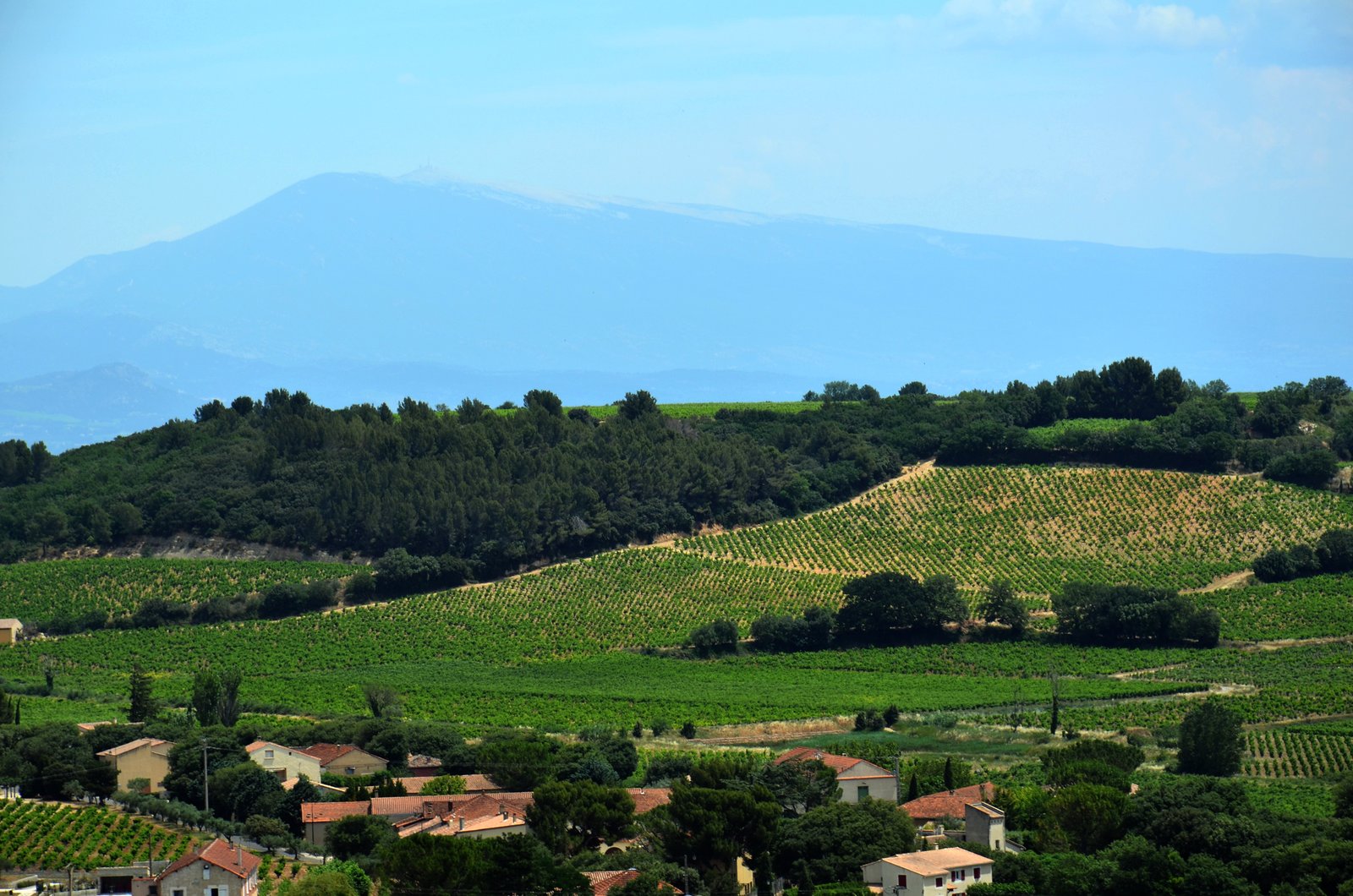
Châteauneuf-du-Pape is a village of the Vaucluse, on a hill above the Rhône between Avignon and Orange, and the name of a southern Rhône wine. The “new castle of the pope” was built in the 14th century for the popes of Avignon. Its ruined keep still overlooks the vineyards.
The appellation in the glass
- The blend: Grenache noir leads among 18 permitted grapes, or thirteen varieties once the colour variants of Grenache, Clairette and Piquepoul are counted together. Syrah, Mourvèdre, Cinsault, Counoise, Roussanne and Bourboulenc are among them.
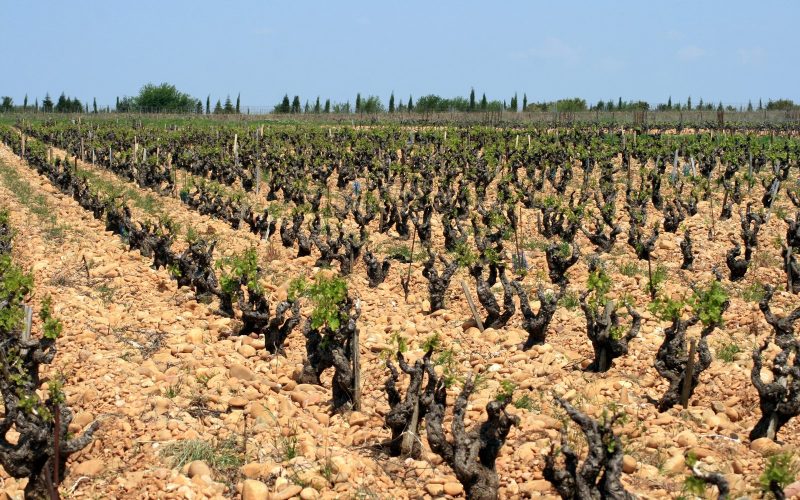
- The stones: many plots are covered in large rounded pebbles, the galets roulés, mixed with red clay, which store the day’s heat. Other plots lie on sand and sandstone.
- The size: 3,150 hectares over five communes, Châteauneuf-du-Pape, Bédarrides, Courthézon, Orange and Sorgues, for about 90,000 hectolitres a vintage, some 12 million bottles, from around 300 growers who declare a harvest.
From the 1923 syndicate to the 1936 decree
- 4 October 1923: the growers found their syndicate, with Baron Le Roy de Boiseaumarié as president.
- 21 November 1933: the Court of Cassation confirms the delimitation of the area and its production rules.
- 15 May 1936: the decree of the appellation, published the same day as Arbois, Cassis, Cognac, Monbazillac and Tavel, the first six appellations d’origine contrôlée in France.
The rules still fix the growing methods, a minimum alcohol level, a closed list of grapes and mandatory grape sorting.
Around the village of Châteauneuf-du-Pape
- Avignon: the papal city, with the Palais des Papes, south of the vineyards.
- Orange: the Roman town to the north.
Before you go
- Arriving: Avignon has the nearest high-speed (TGV) station. Marseille Provence is the large airport of the region.
- Getting around: the estates are spread around the village. Plan a car and a driver who skips the tastings.
- Harvest: in September and October, some estates suspend their cellar visits.
- Children: Château la Nerthe admits no one under 13.
- Sundays: Domaines Mousset adds 5 euros to its tasting on Sundays and public holidays.
Frequently asked questions
How much is a wine tasting in Châteauneuf-du-Pape?
8 to 26 euros per adult at the estates compared in this guide (2026 prices).
Can you visit a cellar in Châteauneuf-du-Pape?
Yes. Guided cellar tours with tasting cost 20 to 35 euros, at Clos du Calvaire, Château la Nerthe and Domaine La Boutinière.
Where is Châteauneuf-du-Pape?
In the Vaucluse, in the southern Rhône Valley, between Avignon and Orange.
Why is it called Châteauneuf-du-Pape?
The “new castle of the pope” was built in the 14th century for the popes then living in Avignon. Its ruins still stand above the village.