
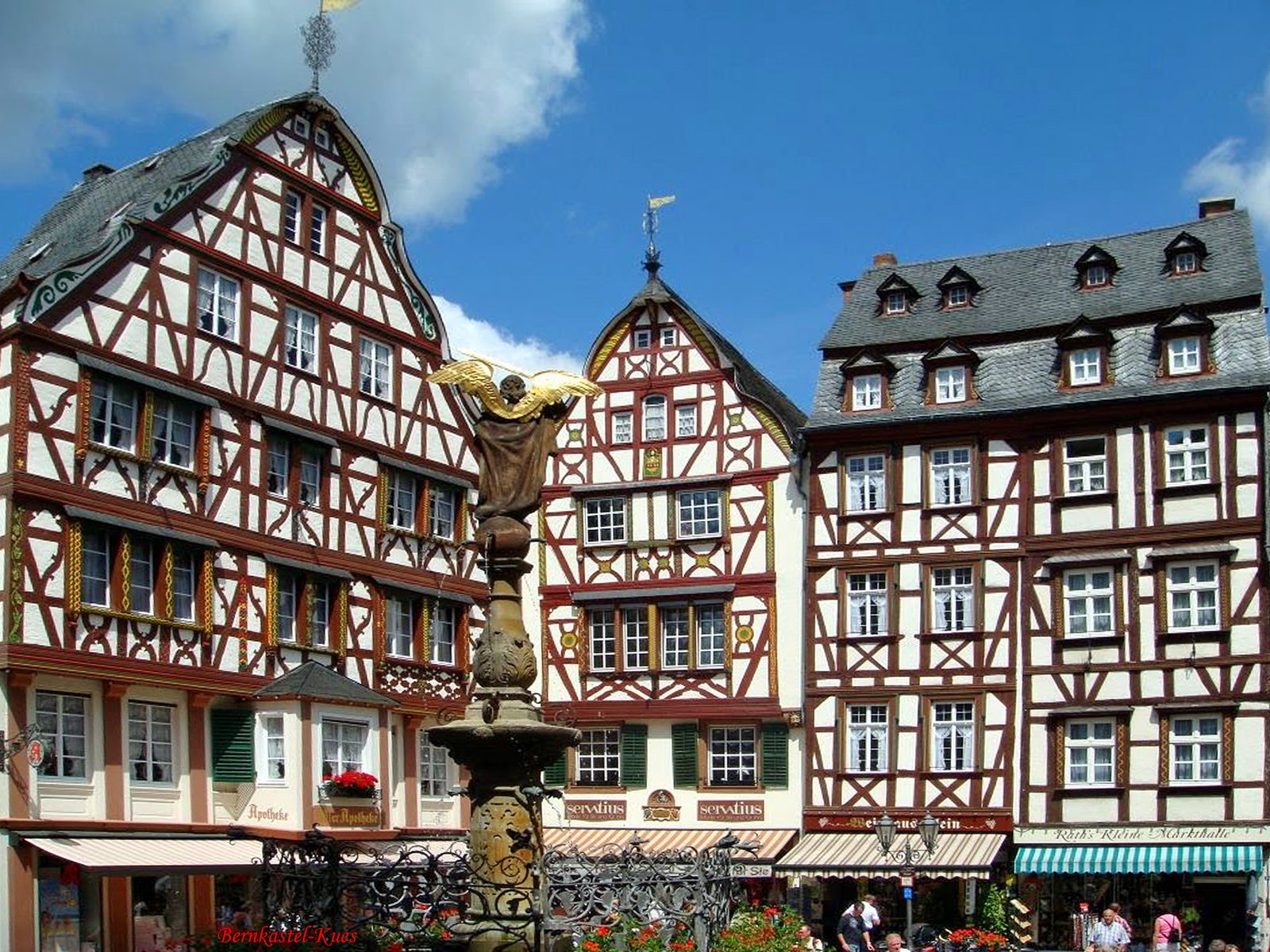
Bernkastel-Kues
Bernkastel-Kues, on the Mosel, for wine lovers: estate tastings from 7 to 25 euros and cellar tours with tasting from 12.50 to 19 euros, with tips.
At a glance
- A wine town on both banks of the Mosel, Bernkastel on one side, Kues on the other
- Riesling from steep slate slopes, the signature of the valley
- Estate tastings from 7 to 25 euros along the river and in the Ruwer valley
- Weingut Dr. Loosen pours five wines of your choice for 20 euros, in Bernkastel
- 1culinary experience
Culinary experiences in Bernkastel-Kues
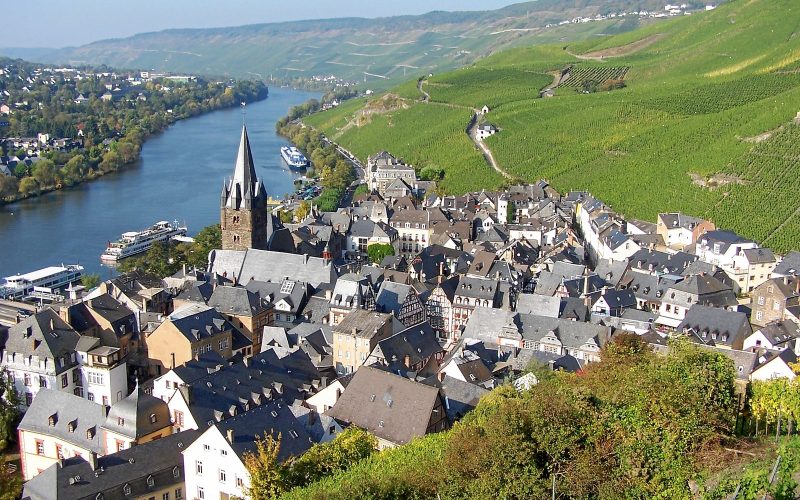 Berthold Werner, Public domain
Map of Bernkastel-Kues
What to taste in Bernkastel-Kues
Mosel Riesling
Light, high in acidity, from dry to lusciously sweet, the grape the valley is known for.
Federweißer
Partly fermented new wine, cloudy and sweet, sold in autumn with onion tart (Zwiebelkuchen).
Spundekäs
A soft cheese spread with onion and paprika, served with pretzels or bread at wine tastings.
Bernkastel-Kues straddles the Mosel in the middle of its wine valley: Bernkastel, with its half-timbered market square, on the right bank, and Kues on the left, linked by a bridge. Vineyards climb the slate slopes straight above the old town.
The middle Mosel and beyond
- In Bernkastel: Weingut Dr. Loosen, at the St. Johannishof.
- Nearby villages: Weingut Markus Molitor at Zeltingen-Rachtig, Weingut Bastgen at Osann-Monzel.
- Downriver: Weingut Gibbert-Pohl at Briedel and Weingut Amlinger & Sohn at Neef.
- The Ruwer valley, near Trier: Reichsgraf von Kesselstatt at Schloss Marienlay, Morscheid.
Their tastings cost 7 to 25 euros per person in 2026, and cellar tours with a tasting 12.50 to 19 euros.
The Doctor, Cusanus and the town’s dates
The vineyard above the old town owes its name to a legend from the town chronicle: in the 14th century, Archbishop-Elector Boemund II of Trier, ill at Landshut castle, was cured by Bernkasteler Doctor wine.
- 1401: Nikolaus von Kues, known as Cusanus, is born in Kues, in the house of the Mosel boatman Henne Cryfftz.
- 1451 to 1458: the St. Nikolaus-Hospital is built on the left bank, to house 33 men from all classes.
- 8 January 1692: Landshut castle burns. It has stood in ruins ever since.
- 1804: Anton Cetto buys the whole Doctor vineyard from the French government in Paris.
- 1905: Kues is incorporated into the town of Bernkastel.
- 1950: the wine fair first held in 1931 becomes the Wine Festival of the Middle Moselle.
The wine of the Bernkastel-Kues hospital
Cusanus endowed his foundation with nine hectares of Riesling vineyards in the Middle Mosel. Its library holds more than 300 manuscripts from the 9th to the 15th century, and in the vaulted cellar of a former farm building, a vinothek pours over 150 wines from the Mosel region.
Riesling country
The Mosel winds from the French border to the Rhine at Koblenz, and Riesling covers most of its slopes. The wines are often light in alcohol, with ripeness levels written on the label: Kabinett, Spätlese, Auslese.
Trier, upriver, is Germany’s oldest city, with Roman monuments: a day there pairs well with a tasting in the Ruwer valley, and Kesselstatt holds its weekend tastings in its Weinstube in the city.
Before you go
- Words to know: Weingut = wine estate, Weinprobe = tasting, Kellerführung = cellar tour, Vinothek = estate wine shop.
- Getting around: the estates are spread along the winding river. A car or the riverside buses and boats link the villages.
- Arriving: Frankfurt and Luxembourg have the closest large airports. Trier and Koblenz are the nearest cities.
- Opening days: several estates pour on weekdays and Saturdays only. Check before a Sunday visit.
- Alcohol: in Germany, wine can be bought from age 16.
Frequently asked questions
How much is a wine tasting on the Mosel?
7 to 25 euros per person at the six estates compared in this guide (2026 prices).
What wine is the Mosel known for?
Riesling, grown on steep slate slopes above the river.
Is Bernkastel-Kues a good base for Mosel wineries?
Yes for the middle Mosel: Dr. Loosen is in Bernkastel, and Zeltingen-Rachtig and Osann-Monzel are close by. Neef and Briedel are further downriver, the Ruwer valley near Trier.
When is the best time to visit the Mosel?
The vines grow from spring to the autumn harvest, and autumn brings Federweißer with onion tart. Check each estate’s days before you go: several pour on weekdays and Saturdays only.