
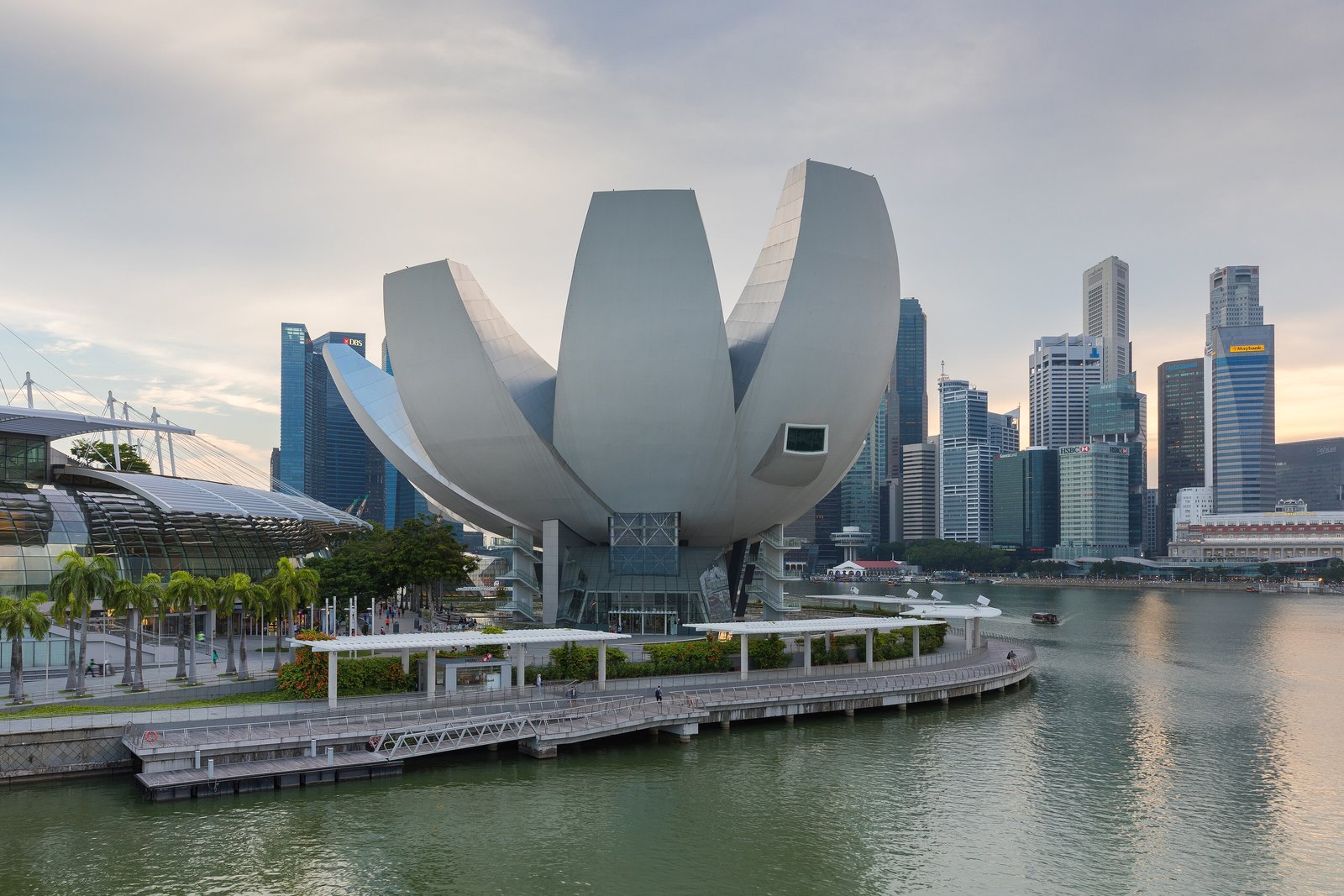
Singapore
Singapore for food lovers: guided hawker centre food tours in Chinatown, 99 to 134.99 Singapore dollars per person, with access tips.
- 1culinary experience
Culinary experiences in Singapore
 kallerna, CC BY-SA

Map of Singapore
Singapore is a city-state on an island at the southern tip of the Malay Peninsula. Its food mixes Chinese, Malay, Indian and Peranakan cooking, and much of it is eaten at hawker centres: halls of cooked-food stalls, built from the 1970s to bring street vendors under one roof. Hawker culture was added to UNESCO’s list of the intangible cultural heritage of humanity in 2020.
Chicken rice, laksa, char kway teow and satay are among the dishes to know. In this guide, three operators run guided hawker food tours in and around Chinatown, including Maxwell Food Centre and Hong Lim Food Centre, for 99 to 134.99 Singapore dollars per person and 2.5 to 3.5 hours.
Practical notes
- Changi Airport is linked to the city by the MRT, the metro. Chinatown has its own station.
- The climate is hot and humid all year, with frequent showers: carry water.
- English is one of Singapore’s four official languages, alongside Malay, Mandarin and Tamil.
Singapore’s hawker centres today
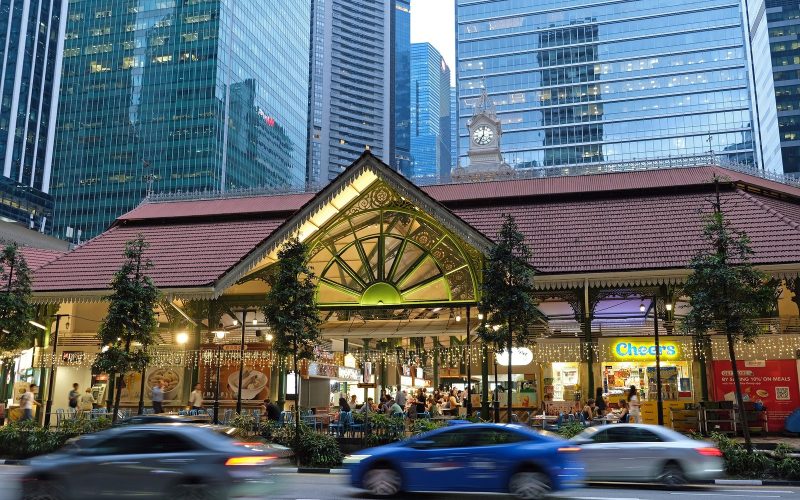
The National Environment Agency manages 123 markets and hawker centres across the island and regulates their tenancies and public health. It describes them as time-tested institutions and important places for community bonding, where people from all walks of life eat affordable food in a clean and hygienic setting.
- UNESCO’s description calls hawker centres “community dining rooms”, where people of diverse backgrounds share breakfast, lunch and dinner, and where chess, busking and art-jamming also go on.
- Some of the oldest hawkers started in the 1960s. Many specialise in a single dish refined over many years and pass their recipes and skills to younger cooks.
- Hawker centres evolved from street food culture and reflect Chinese, Malay, Indian and other cultures, with dishes adapted to local tastes.
Where the hawker centres are
They serve residential, recreational and work districts alike, says UNESCO, which lists community organisations, non-governmental organisations and schools among those who keep the culture alive through training, events and documentation.
The NEA publishes the closure dates of each hawker centre for cleaning: check before travelling across town for a particular stall.