
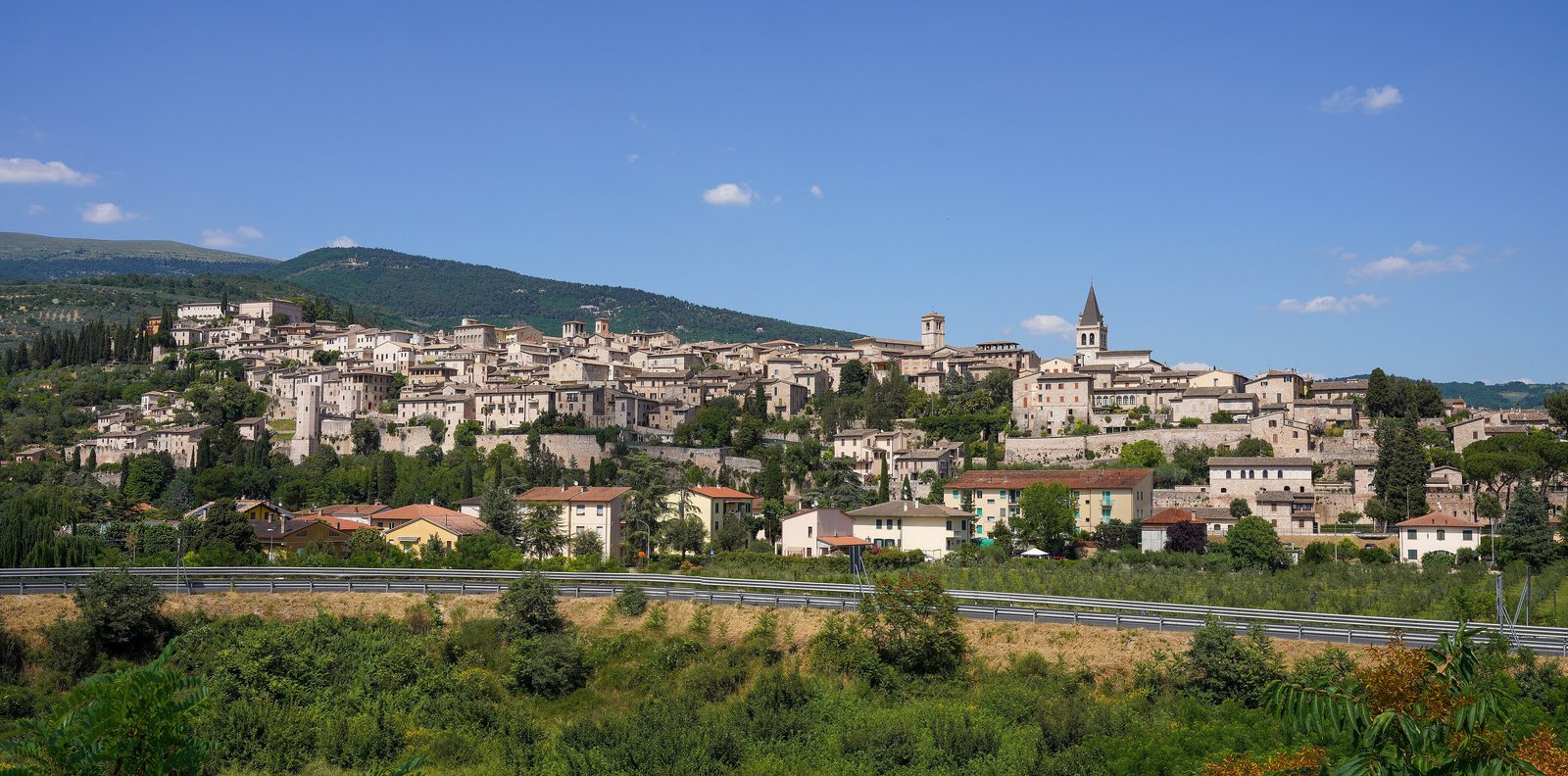
Umbria
Food festivals in Umbria, central Italy: Eurochocolate in Perugia, 13 to 22 November 2026, with practical tips on getting to the hilltop capital.
- 1food festival
Food festivals in Umbria
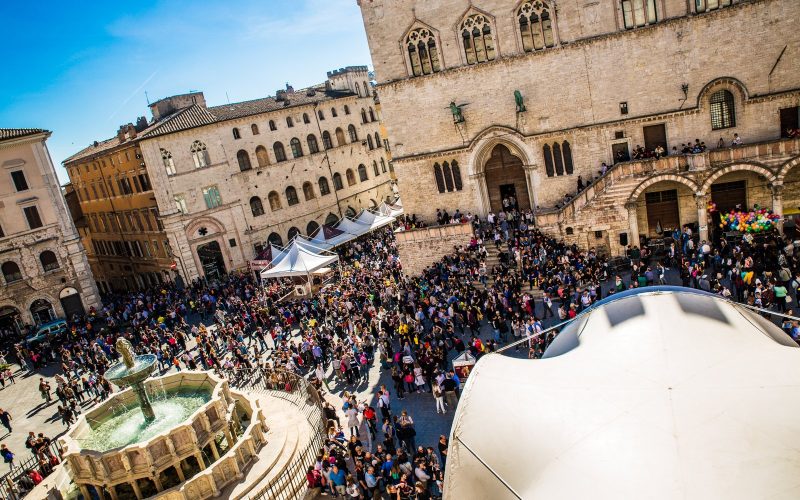 Eurochocolate, CC BY-SA
Cities and towns in Umbria
 Claudioas, CC BY-SA
Map of Umbria
Umbria is a small landlocked region of central Italy, between Tuscany, the Marche and Lazio, and Perugia is its capital. Its best-known food event abroad is Eurochocolate, the international chocolate festival held in the historic centre of Perugia, announced for 13 to 22 November 2026.
The city’s best-known sweet is the hazelnut Baci. The rest of the Umbrian table leans on the land, with black truffles, lentils from Castelluccio and the cured pork of Norcia.
Getting there
Perugia has a small airport, Perugia San Francesco d’Assisi, and regional train links. Florence and Rome are the nearest large rail and air hubs.
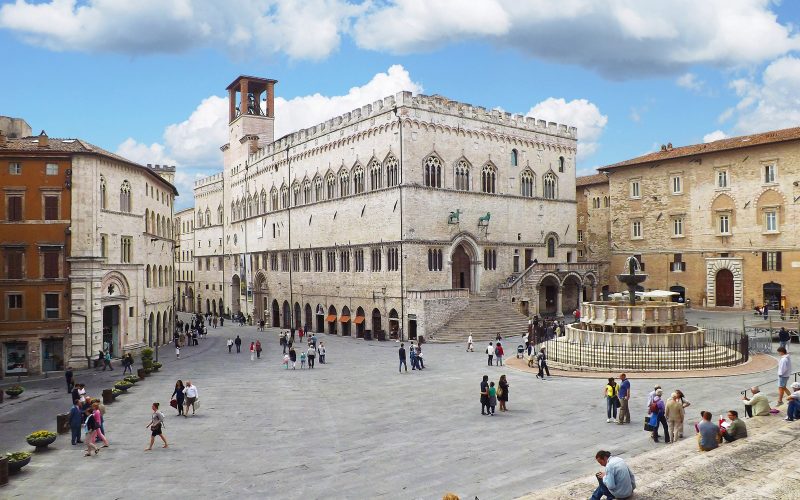
Perugia, Umbria’s hilltop capital
Perugia traces its origins to the 9th century BC and became one of the most important Etruscan cities from the 7th and 6th centuries BC, says Umbria’s regional tourism office. After the fire of 41 BC, Augustus restored its monuments, and the Etruscan Arch still bears the inscription “Augusta Perusia”. In the imperial age the city grew beyond the Etruscan walls, and in the Middle Ages it became a free commune. The office names Eurochocolate and Umbria Jazz as its major events.
- Minimetrò: the city’s light rail runs between the Pian di Massiano and Pincetto terminals, with stations at Cortonese, Madonna Alta, Fontivegge, Case Bruciate and Cupa.
Norcia and the art of the norcino
In the heart of the Sibillini Mountains National Park, Norcia was founded by the Sabines and takes its name from Northia, the Etruscan goddess of fate and fortune. Saint Benedict and his sister Scholastica were born here around 480. In the early Middle Ages, with acorns plentiful in the surrounding oak woods, the people of Norcia specialised in pig farming and pork processing, so well that the trade took the town’s name: norcineria.
Norcia’s city walls, built in the 1300s, still stand despite repeated earthquakes, including those of 1703 and 1859.